
Scoliosis in Children and Young Athletes
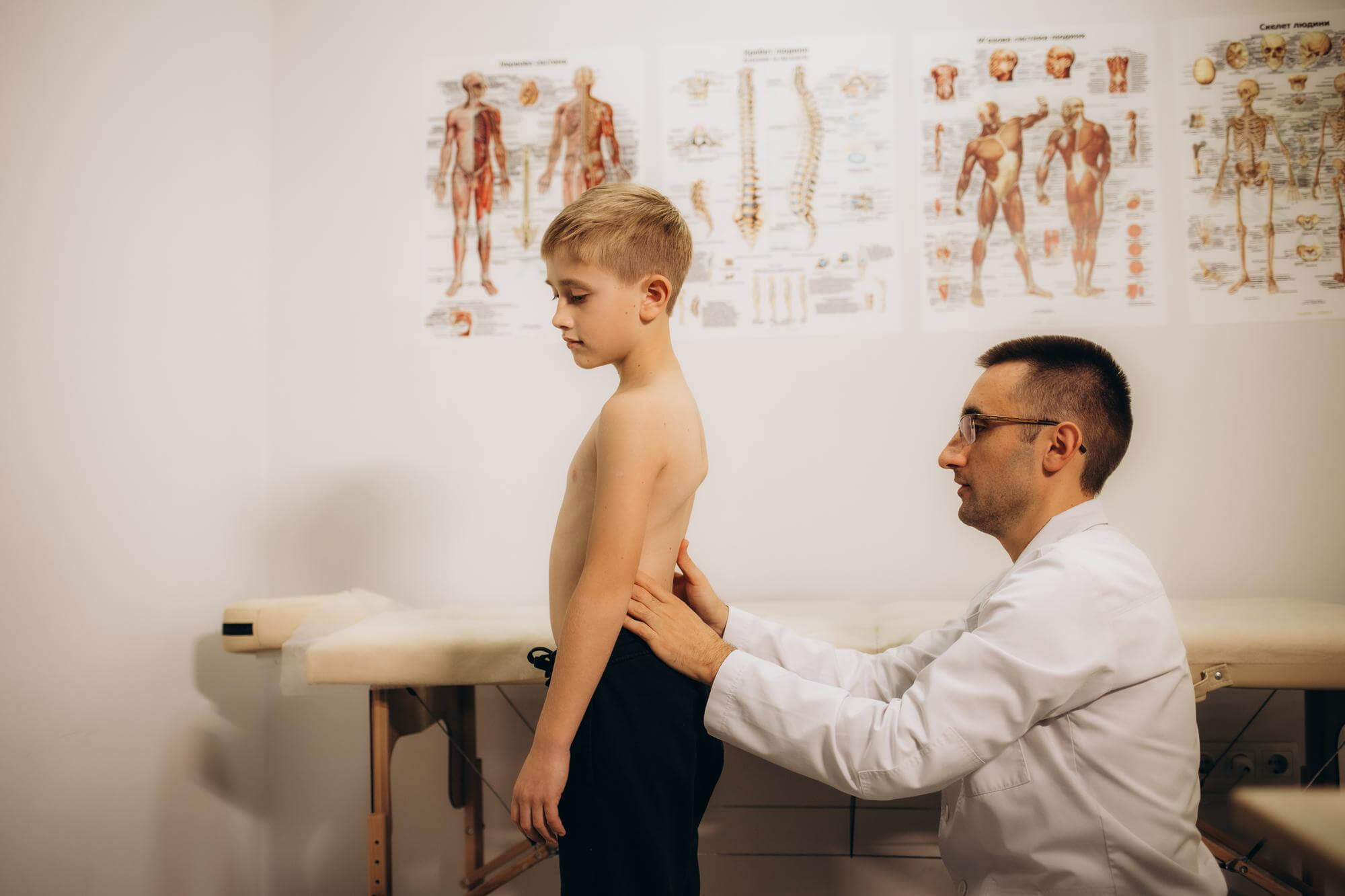
Scoliosis is a three-dimensional change in the shape of the spine, thorax and trunk. The vertebrae rotate, move sideways and extend. In simple terms, the spine can twist, shift laterally and lean backwards. There may be one curve or multiple curves. Often there is one main curve, with secondary curves developing as compensation.
Understanding scoliosis early can help families, young athletes and healthcare professionals choose the most appropriate pathway for monitoring, treatment and physical activity.
What is Scoliosis?
There are several different types of scoliosis. Common categories include Idiopathic, Congenital, Neuromuscular, Syndromic, and Degenerative. The most common form is Adolescent Idiopathic Scoliosis (AIS).
Idiopathic means there is no single clear cause, or that the cause is multifactorial and cannot be fully determined. This type of scoliosis commonly develops during the rapid growth years of adolescence.
Who gets Scoliosis?
Research commonly reports that scoliosis affects around 2 to 3% of adolescents. It has also been suggested that rates may vary according to latitude. Scoliosis is reported more commonly in females than males.
Scoliosis can develop at different life stages:
- Present at birth (congenital)
- During infancy (early onset infantile)
- During childhood (early onset juvenile)
- During teenage years (AIS)
- In adulthood (degenerative or de novo)
Some people may develop scoliosis as a result of another medical condition, such as syndromic scoliosis or neuromuscular scoliosis. Children with idiopathic scoliosis have also been reported to show greater hypermobility compared with healthy controls, particularly in single curves, although no relationship was found with curve angle, rotation or type.
How to identify Scoliosis
Scoliosis is commonly screened using the Adam’s Forward Bend Test.
Observation may begin by looking at posture from the front, back and both sides. Visible differences can sometimes include:
- One shoulder appearing higher
- A shoulder blade sitting differently
- The pelvis appearing shifted or raised on one side
During the Adam’s test, the person bends forwards with knees straight and arms reaching ahead. If scoliosis is present, one side of the rib cage or lower back may appear higher than the other side, reflecting spinal rotation.
Healthcare professionals may also use a scoliometer, assess in standing or seated positions, take clinical photographs and record height measurements.
How is Scoliosis diagnosed?
Scoliosis is diagnosed using an X-ray or EOS scan. A measurement called the Cobb angle is taken and reported in degrees. This helps guide treatment decisions, alongside other factors such as stage of growth.
According to the Scoliosis Research Society (SRS), diagnosis is confirmed when:
- Cobb angle is 10° or higher
- Axial rotation can be recognised
Who needs treatment for Scoliosis?
Not all scoliosis curves worsen over time. Some curves:
- Progress
- Stay the same
- Improve
This is why a wait-and-see approach is sometimes used. Two X-rays taken months apart may be compared to assess progression. If progression is seen, a treatment plan may then be considered.
Even when curves are not progressing, some people may still choose treatment because of pain or a desire to improve overall symmetry.
Health professionals often recommend treatment if scoliosis has been shown to be progressive or there is a high risk of progression.
Our downloadable booklet notes:
- Curves over 50 degrees are widely considered more likely to progress after growth
- Curves 30 degrees or less are often considered less likely to progress
- Curves between 30–50 degrees can be less predictable
What treatment exists for Scoliosis?
Treatment options fall into two broad categories:
Conservative (Non-Surgical)
- Bracing
- Physiotherapy Scoliosis Specific Exercise (PSSE)
Surgical – The most common procedure mentioned is:
- Spinal fusion with titanium rods
Other surgical approaches listed include:
- Vertebral Body Tethering (VBT)
- Api-fix
- Different types of growth rods
PSSE may be used independently for smaller curves, but is commonly used alongside bracing.
Physiotherapy Scoliosis Specific Exercise (PSSE)
To be considered PSSE, physiotherapy should include:
- Patient education
- 3D self-correction
- Stabilisation in self-correction
- Activity of daily living training
PSSE is often used to slow scoliosis progression. In some cases it may help stabilise the curve or reduce the degree of curvature.
It may also be used in fully developed spines to reduce pain and imbalance that may have developed over time.
PSSE can also be used before and after surgery. As prehabilitation, it may help prepare the body physically and neurologically for post-operative changes.
The guide notes that PSSE can be particularly helpful for improving global 3D balance and reducing the visible appearance of scoliosis.
Can I participate in sport if I have Scoliosis?
Yes. The guide explains that most healthcare professionals working with scoliosis encourage as much exercise and activity as possible. Keeping bones and muscles strong is considered beneficial for spinal health.
Sport itself is unlikely to change the shape of the spine, but improved fitness and strength may make PSSE easier to complete.
If surgery has recently taken place, the treating surgeon will usually provide return-to-sport guidance. Certain sports, such as rugby after spinal fusion, may not be advised, but this should be discussed with the individual medical team.
Frequently Asked Questions
What is scoliosis?
Scoliosis is a three-dimensional change in the shape of the spine, thorax and trunk. The spine may rotate, move sideways and extend backwards, creating one or more curves.
How is scoliosis diagnosed?
Scoliosis is diagnosed using an X-ray or EOS scan. A measurement called the Cobb angle is taken in degrees and used alongside growth stage to guide treatment decisions.
What is the Cobb angle?
The Cobb angle is a measurement used to assess the size of a scoliosis curve on an X-ray or EOS scan. According to the Scoliosis Research Society, scoliosis is confirmed when the Cobb angle is 10° or higher and axial rotation is recognised.
Does all scoliosis need treatment?
No. Some scoliosis curves progress, some remain stable and some may improve. This is why a wait-and-see approach is sometimes used, with repeat scans to monitor for progression.
Can children with scoliosis play sport?
Yes. Most healthcare professionals encourage children with scoliosis to remain as active as possible. Keeping muscles and bones strong can have positive benefits for spinal health.
What treatment options are available for scoliosis?
Treatment options include conservative approaches such as bracing and Physiotherapy Scoliosis Specific Exercise (PSSE), as well as surgical options where appropriate.
What is Physiotherapy Scoliosis Specific Exercise (PSSE)?
PSSE is a specialist physiotherapy approach for scoliosis management. It includes patient education, 3D self-correction, stabilisation in self-correction and activity of daily living training.
Is scoliosis more common in girls?
The Kids Back 2 Sport resource states that scoliosis more commonly affects females than males. Click the link to learn more.
Can scoliosis develop in adulthood?
Yes. While scoliosis can begin during infancy, childhood or adolescence, it can also develop in adulthood as degenerative or de novo scoliosis.
Further Information and Contributors
Reviewed by Niamh McGowan and Angela Jackson (Kids Back 2 Sport)
Niamh McGowan is a Spinal Specialist Physiotherapist focused on the conservative management of teenage spinal conditions including scoliosis, kyphosis and spinal fractures. She is the founder and owner of McGowan Physio Clinic and McGowan Physio N.I., an international teacher of the Rigo Concept (BSPTS), and Chair of the CPSMNG scoliosis niche group within the ISCP.
Reviewed by Niamh McGowan and Angela Jackson (Kids Back 2 Sport)
Niamh McGowan is a Spinal Specialist Physiotherapist focused on the conservative management of teenage spinal conditions including scoliosis, kyphosis and spinal fractures. She is the founder and owner of McGowan Physio Clinic and McGowan Physio N.I., an international teacher of the Rigo Concept (BSPTS), and Chair of the CPSMNG scoliosis niche group within the ISCP.
The Rigo Concept (BSPTS)
The Rigo Concept is a classification-based physiotherapy approach to scoliosis management and a recognised school of Physiotherapy Scoliosis-Specific Exercises (PSSE). It applies principles of three-dimensional correction, expansion technique and neuromuscular retraining to specific curve patterns.
Scolicomic
This information is for patients who already have a diagnosis from a qualified health practitioner. The material on this website is designed to support, not replace, the relationship that exists between you and your qualified health professional. If your symptoms are not settling, please do ask for help from one of the practitioners listed on the Kids Back 2 Sport directory or a health professional with experience in children’s conditions.